Where Should Security Cameras Be Positioned Around a Home?
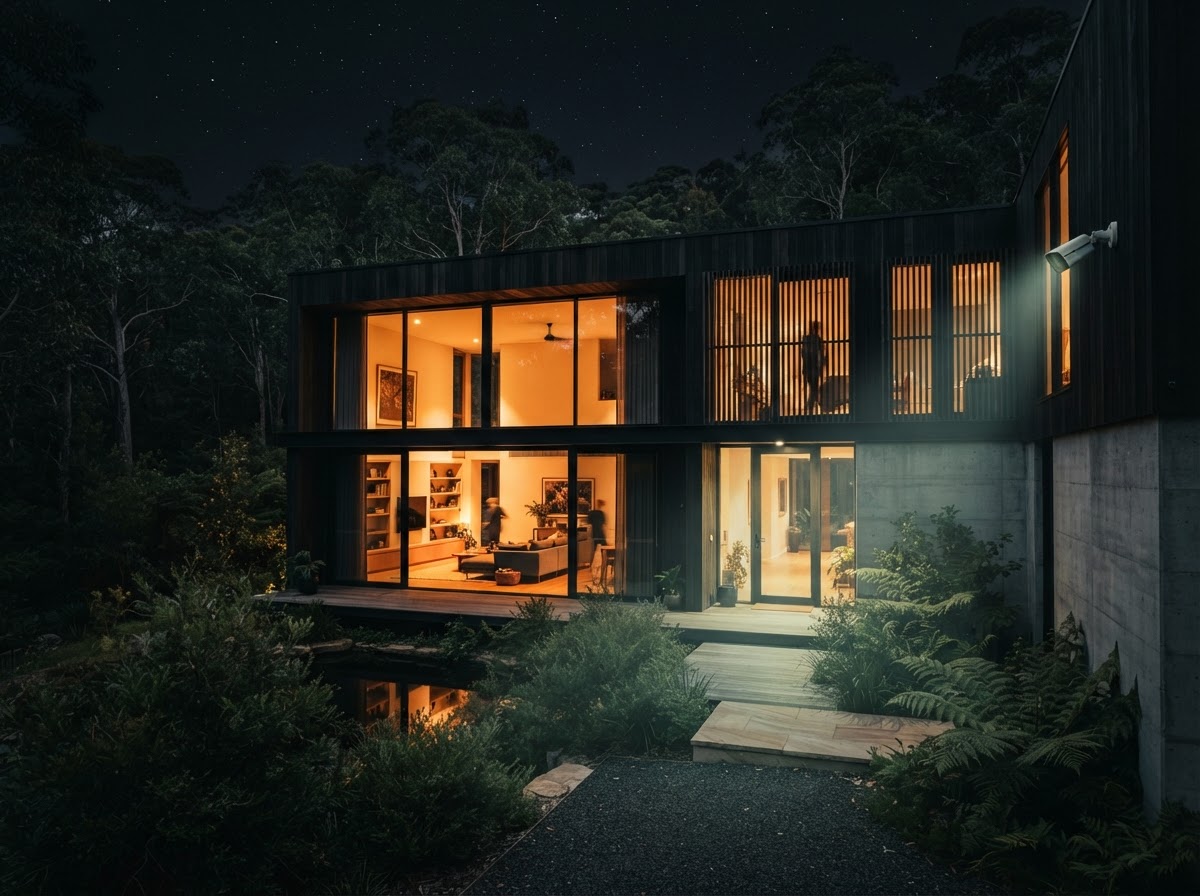
Position follows approach routes. The goal is to see someone before they reach a door, not to film every wall.
Position follows approach routes
Good placement starts with the routes a person takes to reach your home, not the walls you happen to have. A camera that captures someone walking up the driveway is more useful than three cameras pointed at brickwork.
Map the approach routes first — front, side and rear — then place cameras to cover each one before it reaches a door or window.
Height and angle matter more than resolution
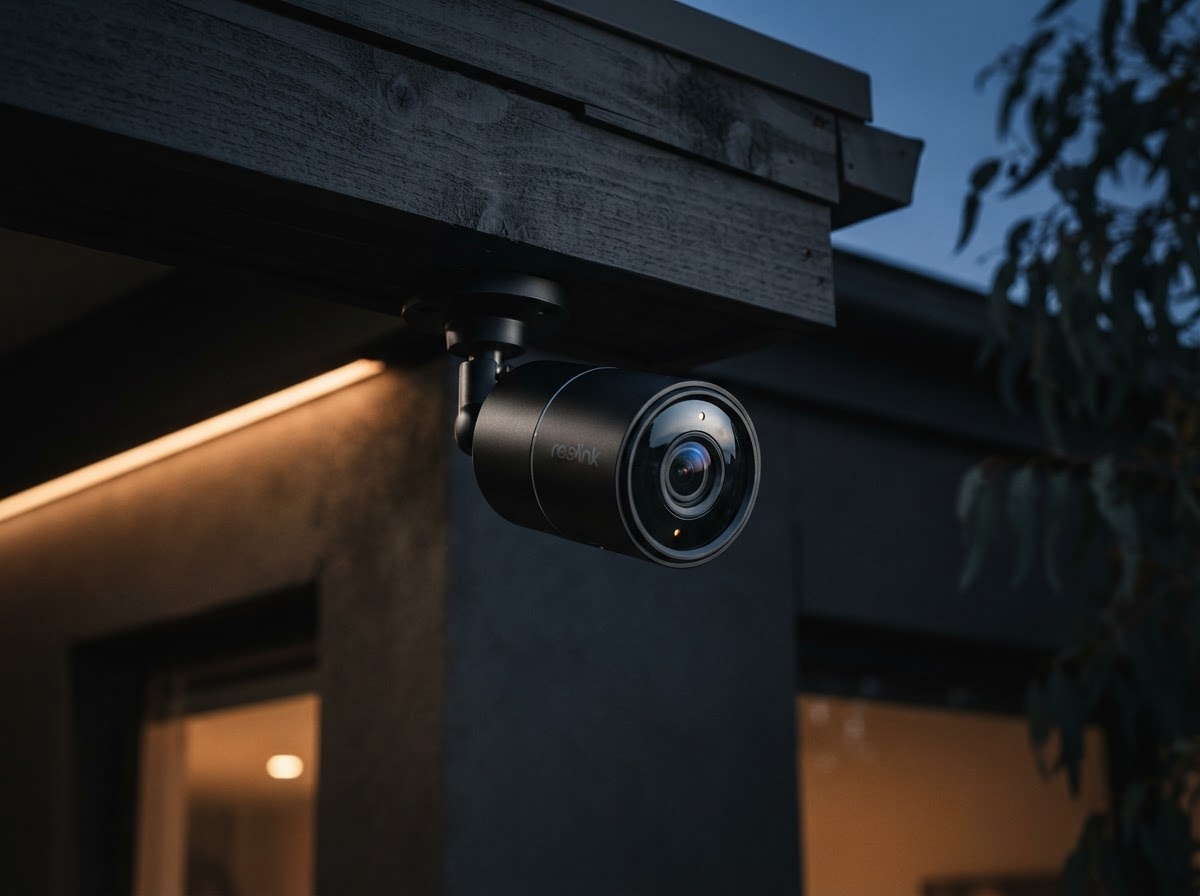
A high-resolution camera mounted too high still captures the top of a head. We generally mount exterior cameras between 2.4 and 3 metres — high enough to be out of easy reach and to see across a space, low enough to keep a useful face angle on anyone at the door.
Angle the camera slightly down so it covers the approach and the immediate entry, and so rain doesn't sit on the lens.
Front entry and door
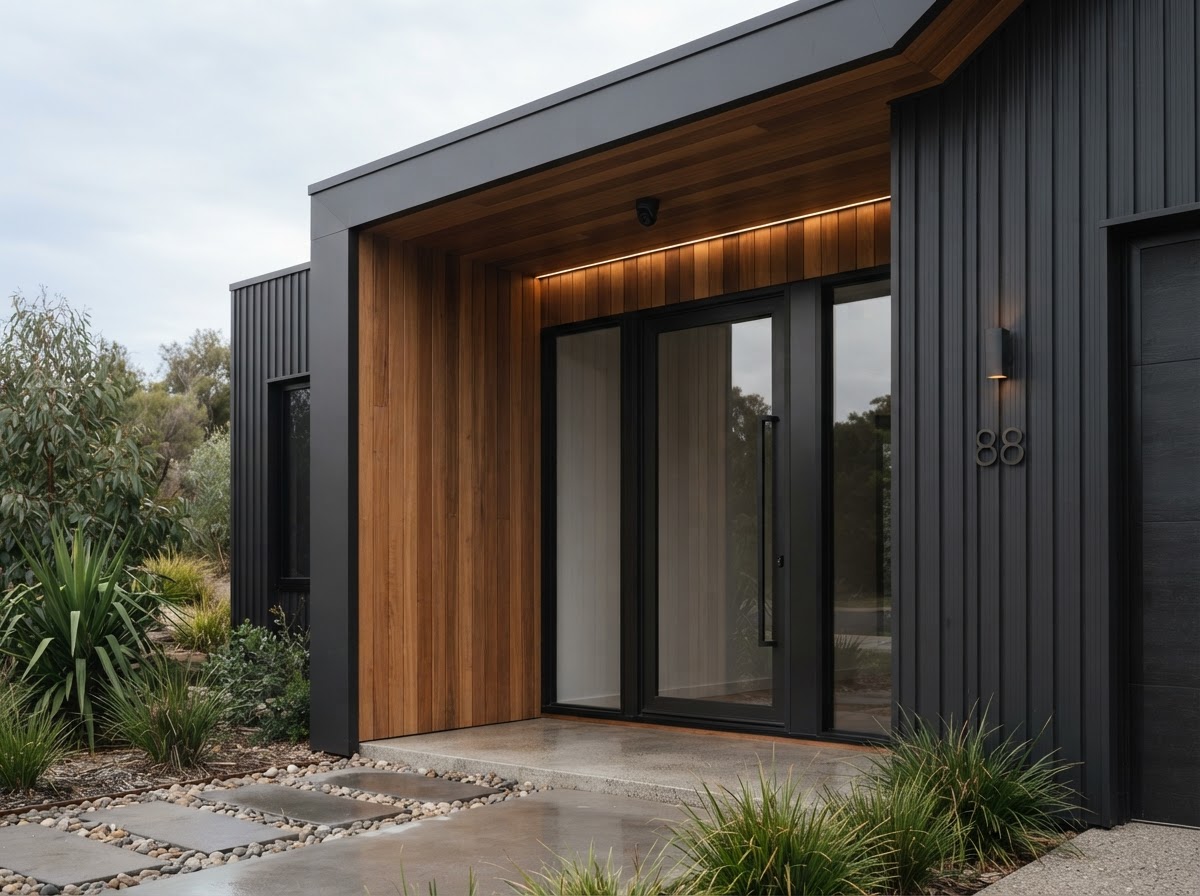
The front door camera is the one you'll use most day to day — for parcels, visitors and checking who's there. Mount it to capture faces at the door, with a slight outward angle so it also picks up anyone walking up the front path.
Side and rear access
Side gates and rear access are the routes most often skipped and most often used by intruders. A camera at the side covers the full passage toward the rear; a rear camera covers the back yard, rear doors and any rear fence or laneway. These are the positions that earn their keep at night.
What to avoid pointing cameras at
Don't point cameras over a neighbour's fence or deep into the street beyond your property — it's poor practice and often a privacy issue. Avoid pointing directly into the sun at the times of day you most want footage, and avoid mounting a camera where glare from a window or light will wash out the image.
If in doubt, an assessment will map the angles for your specific home.
Map this to your own home.
A free SCKA assessment turns this advice into a plan for your property — across the Gold Coast and Brisbane. Start remotely by sending us photos.
Get My Free Security Risk Assessment